You’re searching for the best bed bug mattress encasements that actually stop infestations and protect your family.
I know what it feels like to find those tiny brown bed bugs on your bed.
When it happened in my daughter’s room, I panicked just like you probably are right now.
The exterminator told me the truth most people don’t want to hear: “Using the wrong mattress and box spring encasement for bed bugs is a waste of money and lets the bed bugs win.
After trying most of the so-called bed bug proof mattress covers online, I learned that most don’t work.
The EPA recommends using protective covers that seal mattresses and box springs to trap bed bugs inside, where they will eventually die.
Absolute protection means choosing a full encasement mattressprotector that’s tested, zippered tightly, and built to trap bed bugs until they die.
If you’re a parent with children and a pet, renter, or homeowner who wants a safe, hypoallergenic bed bug mattress cover — not one coated with harsh chemicals — this guide is for you.
I’ll show you how to choose durable, waterproof mattress encasements that last and work.
I’ve been where you are, and I want to make this simple. By the end of this guide, you’ll know exactly how to choose certified bed bug mattress encasements, avoid expensive mistakes, and finally sleep without worry.
Here’s what we’ll cover:
- What makes a mattress encasement truly bed bug-proof
- Features that separate real protection from fake marketing
- The safest options for your children and pets
- How to install your mattress encasement for lasting results
Let’s start with understanding what these encasements are and why both your mattress and box spring need them.
We independently review every product we recommend. We test for safety, efficacy, and value, so you can buy with confidence. When you purchase through our links, we may earn a commission at no extra cost to you. Learn more about our testing methodology and affiliate disclosure.
Understanding Bed Bug Mattress & Box Spring Encasements
What Are Bed Bug Encasements? (vs. Regular Mattress Protectors)
When I first searched for bed bug protection online, I nearly bought a standard waterproof mattress protector.
It looked similar, cost half as much, and had thousands of positive reviews.
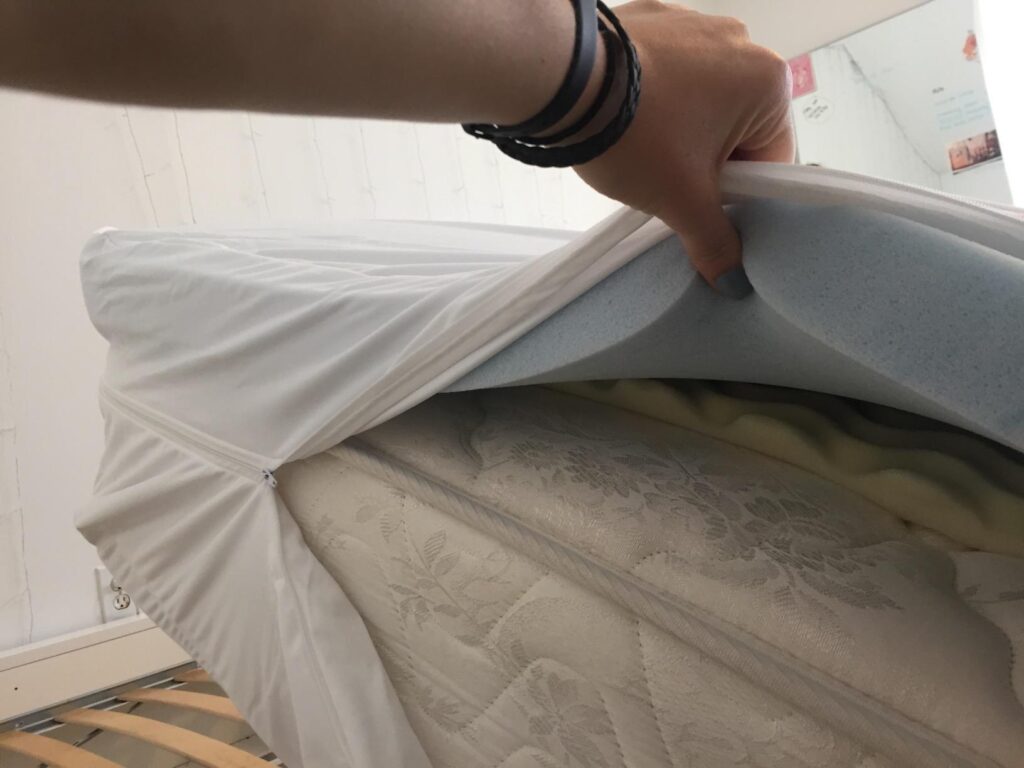
However, the critical difference is that regular mattress protectors only cover the top surface like a fitted sheet, while bed bug encasements are full 360-degree zippered covers that completely seal all six sides of your mattress or box spring.
A mattress protector is like putting a hat on your head, while an encasement is like sealing your mattress in a giant Ziploc bag.
Bed bugs are notoriously resilient and can survive for several months without feeding, particularly in cooler temperatures.
This longevity is one reason that relying solely on partial mattress protection is often an ineffective approach to controlling an infestation.
Bed bug encasements work in two ways. First, they trap any existing bugs inside the mattress, preventing them from feeding on you until they die of starvation.
Second, they create an impenetrable barrier that stops new bugs from burrowing into your mattress’s seams, folds, and fabric.
The fabric must be tightly woven enough to block even the smallest bed bug nymphs, which measure just 1.5 millimeters long.
The most important thing is that the encasement must be specifically designed and tested for bed bugs.
Many waterproof covers use vinyl or polyurethane membranes that protect against liquids but have pore sizes large enough for tiny bed bug nymphs to squeeze through.
A proper bed bug proof mattress cover will explicitly state it has been tested against bed bugs, not just water or allergens.
The zipper is where most products fail. Standard zippers have gaps between the teeth large enough for newly hatched nymphs to escape.
Certified bed bug mattress encasements use specialized micro-tooth zippers or patented closure systems that eliminate these escape routes.
When my exterminator showed me the difference under magnification, I understood why he was so insistent about this detail.
Why Both Mattress And Box Spring Encasements Are Essential
I made this mistake initially. I bought a queen-size mattress encasement for $89, felt good about protecting my investment, and thought I was done.
Two weeks later, we still had bites.
The exterminator lifted the mattress and showed me why: the box spring was crawling with bed bugs hiding in the wooden frame, fabric backing, and crevices.
Box springs are the preferred hiding spot for bed bugs during infestations.
Based on research by pest management professionals, both mattresses and box springs are primary harborage areas for bed bugs.
While mattresses offer easy access to a sleeping host, box springs provide numerous hidden and hard-to-reach areas, making them both high-priority inspection and treatment zones.
Box springs have more cracks, crevices, and hollow spaces where bed bugs can hide deeply and reproduce safely.
The fabric dust cover on the bottom provides easy entry points, and the wooden slats create numerous harborage areas.
Using only a mattress encasement leaves your box spring as an active breeding ground.
The bed bugs simply migrate between the unprotected box spring and your newly protected mattress, continuing to feed on you at night.
This is why pest control professionals require both mattress and box spring encasements for bed bugs before they can guarantee that their treatment is effective.
Box spring encasements have different design requirements than mattress encasements.
They’re typically shallower (6-9 inches versus 12-18 inches for mattresses), need reinforced corners to handle the rigid frame, and require extra-durable fabric because box springs have sharper edges that can tear cheaper materials.
When budgeting, plan for both pieces. You should expect to spend $80-$150 for a quality mattress encasement and $60-$120 for the box spring encasement, depending on the size.
One alternative worth mentioning: if you’re replacing your bed setup entirely, consider a platform bed frame that eliminates the need for a box spring.
This reduces hiding spots and cuts your encasement costs in half, though it’s obviously a bigger investment upfront.
How Bed Bug Encasements Work: The Science Behind the Protection
Bed bug encasements serve two distinct functions depending on whether you’re preventing or treating an infestation.
Understanding this timeline completely changed how I approached an infestation.
In prevention mode, when your mattress is bed bug free, a properly installed encasement creates an impenetrable barrier.
Bed bugs can’t bite through tightly woven fabric. For an encasement to be effective, its fabric must be tightly woven to block the smallest bed bug life stages.
The bed bugs also can’t squeeze through a properly sealed zipper, which means they simply cannot establish residence inside your mattress.
This is why hotels increasingly use encasements on all mattresses as standard bed bug prevention bedding.
In treatment mode, when bed bugs are already inside your mattress, encasements become a containment and starvation tool.
Once you zip bed bugs inside, they’re trapped without access to their food source: you.
Bed bugs must feed on blood to survive and reproduce. The timeline matters here.
Adult bed bugs can survive 6-12 months without feeding under normal room temperature conditions.
In cooler environments (below 60°F), they can extend survival up to 18 months by entering a semi-dormant state.
This is why the CDC and professional pest control exterminators recommend leaving encasements on for a minimum of 12-18 months during active infestations.
I wanted to remove mine after six months when we hadn’t seen any bed bugs for weeks.
My exterminator warned me that premature removal is one of the top reasons families experience re-infestation from their own trapped bed bugs.
One critical limitation you need to understand is that encasements only protect the mattress and box spring.
They do absolutely nothing for bed bugs hiding in your bed frame, headboard, nightstands, baseboards, electrical outlets, carpet edges, or furniture.
During my infestation, we found bed bugs in all these locations. The mattress and box spring encasement for bed bugs prevented those areas from becoming new harborage sites for bed bugs.
However, we still needed comprehensive heat treatment and chemical application for the rest of the bedroom.
Encasements are one essential tool in a complete pest control strategy, not a magic solution.
They protect your most expensive bedroom investment, eliminate two major harborage sites, and make monitoring much easier because you can spot any bed bugs crawling on the smooth surface of the encasement.
But they work best when combined with professional treatment, thorough vacuuming, steam cleaning, and ongoing monitoring.
Essential Features: What Makes an Encasement Truly Bed Bug-Proof
Bite-Proof and Tear-Proof Fabric That Bed Bugs Can’t Get Through
The fabric is your first line of defense, and it matters more than you think.
My neighbor learned her lesson after buying a cheap “bed bug cover” online.
Her exterminator took one look, held it up to the light, and said, “If light can get through, so can bed bugs.” He was right.
Tiny baby bugs, called nymphs, can slip through even the smallest gaps.
Good bed bug mattress encasements are made from tightly woven material that bed bugs can’t bite or crawl through.
Bed bugs have sharp mouths made to pierce skin, but they can’t break through strong fabric.
For an encasement to be truly bed bug-proof, it must be constructed from a durable, tightly woven fabric with pores small enough to block the smallest bed bug life stages.
An equally important element is a high-quality, securely sealing zipper system, as weak seams or a faulty zipper can compromise the entire product’s effectiveness.
What works best is a high-density polyester, cotton-polyester blends, and microfiber.
Polyester is tough and budget-friendly. Cotton blends tend to feel cooler but may wear out more quickly.
Microfiber gives you the best mix — it’s soft, breathable, and tough enough to last years.
Premium microfiber bed bug proof mattress covers usually cost $100–150, while standard polyester versions run around $50–$80.
Don’t get fooled by the word “waterproof mattress encasement.” That doesn’t always mean bed bug-proof.
Vinyl or polyurethane layers may stop spills, but still have holes big enough for bed bugs to crawl through.
I tested two mattress covers myself. The “waterproof” one had tiny gaps under a magnifying glass; the certified full encasement mattress protector didn’t.
Always check that the label says, “tested for bed bug penetration” or “lab-tested barrier fabric.”
If it only mentions “stain-resistant” or “allergen-proof,” skip it. Real protection requires real testing.
Additionally, tightly woven encasements serve as both a dust mite and bed bug protector, also keeping out allergens.
When I switched to a hypoallergenic bed bug mattress cover, my daughter’s nighttime coughing eased up almost overnight, and that was before the infestation was fully gone.
These fabrics do more than protect your bed; they protect your family’s sleep, health, and sanity.
The Critical Importance of Zipper Design
The truth is, most bed bug mattress encasements fail at the zipper. You can buy the best fabric on earth, but if the zipper has even the tiniest gap, the bed bugs win.
I learned this lesson when my first “bed bug-proof” cover looked fine until my exterminator slid a bed bug nymph through the 2-millimeter gap between the zipper teeth. That $80 cover went straight to the trash.
Real protection comes from fine-tooth zippers that leave no space for bed bugs to crawl through.
The best encasements use micro-tooth zipper designs with gaps smaller than half a millimeter.
Some even use dual-zipper systems that close in opposite directions, sealing the edge completely.
Top brands use special patented systems built for real-world use:
- Protect-A-Bed’s AllerZip uses a three-sided zipper with a sealed end-stop and inner flap for total closure.
- CleanRest’s Zip-N-Click gives an audible “click” when fully locked.
- Mattress Safe’s Zipper with Hook locks the pull tab so it can’t open accidentally.
- SureGuard’s Invisi-Zip hides the zipper teeth inside a fabric channel, creating a smooth, bug-proof seal.
The zipper end-stop — the point where it closes — is just as important.
Cheap covers leave a 5–10 millimeter hole, which is essentially a front door for bed bugs.
Quality mattress and box spring encasements for bed bugs use fabric flaps, zipper guards, or Velcro locks to seal this spot tight.
My current encasement even features a Velcro flap that folds over the zipper pull for an added layer of security.
Red flags to avoid:
- You can see light through the closed zipper.
- The zipper feels weak or snags easily.
- It’s made of plastic instead of metal.
- It uses Velcro without a proper zipper.
- There’s no clear end-stop protection.
When shopping online, always zoom in on zipper photos and read the reviews.
If you see complaints like “zipper broke” or “bed bugs got through,” skip it. A full encasement mattress protector with a fine-tooth zipper is non-negotiable.
Pro tip: after installation, secure the zipper pull to the end-stop with a small safety pin. It’s a free, simple way to add a third layer of defense — and profound peace of mind.
And remember, real bed bug proof mattress covers don’t just stop bed bugs.
They also serve as a dust mite and bed bug protector, keeping your sleep clean, safe, and itch-free.
Pair that with a hypoallergenic bed bug mattress cover, and you’ve locked down both comfort and protection.
Full Coverage Requirements: No Weak Points
For bed bug mattress encasements to be effective, they must cover the entire mattress.
That means the top, bottom, and all four sides — no gaps, no openings, no “almost.”
If even one side is left open, bed bugs will find it.
I’ve seen products sold as “bed bug encasements” that only cover five sides, leaving the bottom open like a fitted sheet.
Those are not real encasements. They might block spills, but they’ll fail the moment bed bugs show up.
Strong seams are just as important as full coverage. Cheap encasements tear fast or leave tiny holes along the stitching.
Quality, full encasement mattress protectors use double or triple stitching and sometimes add internal seam tape to seal the holes.
To be truly effective, a mattress encasement must be constructed from a durable material with reinforced seams that will not rip, even under significant stress.
For peace of mind, consumers should look for covers that have been independently tested and certified by qualified entomologists to verify their durability and effectiveness against bed bugs.
Zippers aren’t your only line of defense. Look for encasements with internal zipper flaps — a fabric panel sewn behind the zipper to create a second wall bed bugs can’t cross.
When I opened my SafeRest cover, I could see a 2-inch flap running along the inside. Even if a bed bug somehow slipped past the zipper, it would hit that inner shield next.
Fit matters too. If the encasement is too tight, the fabric stretches and weakens until it tears.
If it’s too loose, folds and bunches create spaces where bed bugs can hide, or the edge can unzip.
Measure your mattress depth carefully — standard beds are typically about 8–12 inches deep, pillow-tops range from 14–18 inches deep, and luxury mattresses can reach 20 inches or more.
Always measure from the base to the tallest point (including any toppers), then add 2 inches for comfort.
Box springs are shallower — usually 6–9 inches — so they’ll need their own mattress and box spring encasement for bed bugs. Don’t assume one size fits both.
Some brands now make “stretch-to-fit” or “universal” encasements with flexible panels that fit different mattress depths.
They cost a little more — around $10–20 extra — but the elastic sections must still be tightly woven enough to stay bed bug resistant.
The fact is that real protection means zero weak points. A tight weave, sealed seams, and a perfect fit turn your encasement into a fortress.
Certifications and Testing Standards to Look For
After spending hours researching encasements, I realized that anyone can slap “bed bug proof” on a label. That doesn’t mean it’s true.
Real bed bug mattress encasements earn their claims through testing and certification, not marketing buzzwords.
The best products are tested by certified entomologists (bed bug experts) or independent labs.
They use real bed bugs — eggs, nymphs, and adults — and check if any can bite, crawl through, or escape after 24–72 hours.
Good bed bug proof mattress covers pass with zero escapes and zero bites. Anything less isn’t real protection.
Look for encasements that have been tested by universities recognized for their expertise in pest research, such as Virginia Tech, Rutgers, or the University of Kentucky.
These schools specialize in bed bug science, and their testing means the product has survived real-world conditions.
The most trustworthy brands show proof on their websites — something like “Tested by Rutgers University, 2024.” If you can’t find that info, don’t buy it.
Chemical safety matters too. The Oeko-Tex Standard 100 certification proves that a product’s fabric is free from more than 300 harmful substances, including pesticides and heavy metals.
When I spotted this certification on Utopia Bedding’s encasement, I knew it was safe for my daughter to sleep on.
Families with children or pets should always pick hypoallergenic bed bug mattress covers that carry this label.
Another helpful seal is the Asthma and Allergy Friendly Certification from the Asthma and Allergy Foundation of America.
It’s not bed bug-specific, but it guarantees tight fabric that blocks allergens like dust mites, pet dander, and pollen.
These dust mite and bed bug protectors cost a bit more ($80–120), but they’re worth it if your home struggles with both bed bugs and allergies.
Be careful with vague claims like “scientifically tested” or “recommended by experts.”
Those phrases mean nothing unless the manufacturer names who did the testing and when. If they can’t back it up, walk away.
Another red flag is pesticide-treated encasements. The CDC warns that chemically treated bedding can cause skin irritation and breathing problems, especially for children and pets who spend hours in bed every night.
The safest and most reliable mattress and box spring encasements for bed bugs use physical barriers — tight fabric and secure zippers — rather than chemicals.
When you see official certifications, you’re not just buying fabric — you’re buying proof that it actually works.
Quality-tested full encasement mattress protectors protect your health, your wallet, and your sanity for years to come.
Waterproof vs. Water-Resistant: Do You Need Both?
When I first started learning about bed bug mattress encasements, the waterproof question confused me.
Did I really need it? Would it affect the bed bug protection?
After months of use, I can tell you this — if you have children, pets, or you sweat at night, waterproofing isn’t optional. It’s essential.
Waterproof means no liquid can pass through, ever. This protection usually comes from a thin layer of polyurethane or vinyl under the fabric.
Water-resistant, on the other hand, only blocks small spills for a short time before the liquid soaks through.
Both can work against bed bugs, but only if the waterproof layer keeps the fabric’s pore size small enough so bed bugs can’t squeeze through.
The benefits of a waterproof mattress encasement become apparent quickly.
My daughter’s water bottle leaked one night, my dog drooled on my pillow, and summer sweat could’ve ruined my $800 mattress.
Thanks to the encasement, everything was wiped clean with no stains, smell, or mold.
Waterproofing keeps your mattress dry and safe, while also protecting against other pests such as dust mites, which thrive in humid spaces.
The problem is, it doesn’t let air pass through very well, and it traps heat.
Old-style vinyl covers will turn your bed into a hot, noisy, sweaty mess.
Modern full-encasement mattress protectors address this issue with breathable, waterproof layers that block liquids while still allowing air toflow.
Premium brands like SafeRest and SureGuard use “silent” waterproof membranes that do not crinkle, generate heat, or produce noise with every movement.
Before buying, check reviews. If you see words like “hot,” “sticky,” or “crunchy,” skip it. Quality waterproof covers feel smooth, cool, and quiet.
If you live alone, don’t have pets, and never eat in bed, a water-resistant encasement might be enough.
However, for families, the extra $10–$20 for full waterproofing is a cheap insurance policy.
Considering most mattresses cost $500–$2000, spending a little more now saves you from expensive regret later.
The best bed bug proof mattress covers give you tight seams for pest control and a waterproof barrier that keeps your mattress fresh for years.
That’s real protection against bed bugs, spills, and everything life throws your way.
Breathability and Comfort Factors
My first experience with bed bug mattress encasements was a miserable one.
I bought a cheap vinyl one, and after one night, I woke up drenched in sweat.
My daughter said her bed felt “like sleeping on a raincoat.” That’s when I learned comfort isn’t a luxury; it’s what makes people actually use the encasement.
If it’s hot, sticky, or noisy, no one will sleep on it, especially children.
Good encasements breathe. They allow air to move and moisture to escape while still blocking bed bugs.
The best materials combine soft, natural tops — such as cotton terry or jersey knit — with a thin waterproof backing.
Premium options like bamboo-derived fabrics go further by keeping you cool and wicking away sweat.
They cost more ($90–150), but they feel like regular bedding, not plastic.
If you see “breathable waterproof membrane” or “moisture-wicking layer” on the label, that’s a good sign.
These materials maintain airflow and prevent that trapped heat feeling.
Avoid vinyl; it scores low on breathability tests and feels like sleeping on a tarp.
Modern encasements like full encasement mattress protectors or hypoallergenic bed bug mattress covers use advanced fabrics that block bed bugs but remain calm and silent.
Noise matters too. Old polyurethane covers crinkled with every movement.
Modern bed bug proof mattress covers use soft, flexible layers that don’t make a sound.
Before you buy, check reviews for words like “quiet,” “noiseless,” or “comfortable.” If people call it “crinkly” or “loud,” skip it.
Temperature control is another hidden deal-breaker. Research shows that even a few degrees too warm can ruin sleep.
Poor-quality mattress covers trap body heat, raising the temperature of your bed by 5–10°F.
If you’re a warm sleeper or live in a hot climate, breathable mattress and box spring encasements for bed bugs are worth every extra dollar.
If you have children, comfort is non-negotiable. If they hate how it feels, they won’t sleep in their own beds.
Let them help pick one by reading reviews together and looking for soft cotton or cool-touch tops.
My daughter chose CleanRest after reading reviews that said it “feels like normal bedding.” She’s slept fine ever since.
A simple trick you can use is to add a fitted sheet over your mattress encasement.
It provides a softer feel, conceals the mattress cover, and allows you to wash the sheets weekly without disturbing the encasement underneath.
It’s the easiest way to keep your bed clean, dry, and bug-free without sacrificing comfort.
Proper Fit and Ease of Use
Buying bed bug mattress encasements sounds simple until you realize you measured wrong and the zipper won’t close.
I saw my neighbor wrestle with a queen-size encasement for 20 minutes before it finally ripped apart.
That $79 mistake taught us both a valuable lesson: measure right the first time.
The most common mistake I see people make is forgetting to check mattress depth.
Don’t assume your “queen” bed is the same as everyone else’s. Measure from the bottom of the mattress to the very top, including any pillow-top or memory foam topper.
Those add 2–6 inches of height. My daughter’s mattress, with her topper, measured 14 inches. It was too thick for a standard 12-inch encasement.
Use a flexible measuring tape and check three spots, such as the center, head, and foot.
Mattresses can sag or compress over time, so choose the largest measurement, then add 1–2 inches of extra space.
A slightly loose mattress encasement is fine because it won’t tear or strain the zipper.
Length and width usually fit standard sizes, but not all brands are exact.
Before buying, scan reviews for words like “too tight,” “too small,” or “doesn’t fit.” That’s a clear warning that the brand’s sizing runs off.
For mattress and box spring encasements for bed bugs, measure each piece separately.
Box springs are shallower — usually 5–9 inches deep — and using a mattress-sized cover will cause bunching and tearing.
I made that mistake once, and the excess fabric shredded at the corners within a week.
Installation can be tricky, especially if you’re doing it alone. Some encasements are stiff or heavy, while others use stretchy, lightweight fabric that makes the job easy.
Look for full encasement mattress protectors with L-shaped zippers as they’re easier to zip up than U-shaped ones.
My SafeRest cover weighed about 2 pounds and took just 10 minutes to install by myself.
You shouldn’t remove the encasement during an active infestation — it should stay sealed for at least 12–18 months — but once it’s safe to wash, follow the care label closely.
Most bed bug proof mattress covers are machine washable on cold or warm cycles and dryer-safe on low heat.
If the fabric requires delicate hand washing or air drying, skip it.
The right fit and design make a huge difference. A properly sized, easy-to-use encasement doesn’t just protect your mattress — it keeps you sane.
It’s the perfect blend of comfort, convenience, and long-term dust mite and bed bug protection.
How to Choose the Right Size Encasement for Your Mattress & Box Spring
Measuring Your Mattress Correctly
Measuring your bed might sound easy, but trust me, it’s trickier than it looks.
I once ordered the wrong size bed bug mattress encasements twice and wasted $160 returning them.
Getting the right fit is the difference between full protection and total frustration.
Start with the height, which most people get wrong. Place your tape measure at the bottom edge where the mattress sits on the frame.
Pull it straight up to the very top, don’t tilt it or press down. If you have a pillow-top or memory foam topper, include it in the height.
My daughter’s mattress was 11 inches, but with her 3-inch topper, it became 14 inches thick.
I bought a 15-inch deep encasement so it fits comfortably without stretching.
Measure three spots, such as the head, the center, and the foot.
Mattresses can sag or settle over time — especially foam ones — so use the tallest number.
A slightly loose full encasement mattress protector is fine, but one that’s too tight can rip or pop the zipper.
Next, measure length and width. Don’t assume “queen” or “king” is exact.
Grab your tape and measure from head to foot (length) and side to side (width).
My “queen” was actually 59 inches wide, not 60, but the encasement still fit because most fabrics have a little stretch.
For box springs, measure separately. They’re much thinner — usually 5–9 inches tall — and require their own mattress and box spring encasement for bed bugs.
If you use a mattress encasement on a box spring, the extra fabric will bunch and tear within weeks.
Write down every measurement and keep it handy. I even took photos of my measuring tape to double-check later when comparing products online.
Note your mattress type — is it hybrid, memory foam, or innerspring—because some bed bug proof mattress covers are designed for specific materials.
Here’s a pro tip: measure before your pest control treatment starts. Once your exterminator gives the green light, you can order right away.
Most hypoallergenic bed bug mattress covers ship in a few days, so if you measure early, you’ll be ready to install before the bed bugs make a comeback.
Getting your measurements right once saves you time, money, and a whole lot of frustration. It ensures your bed bug mattress encasementactually does its job.
Understanding Size Options and Depth Ranges
Buying bed bug mattress encasements can get confusing fast. Mattress sizes might sound standard — twin, queen, king — but the actual fit depends on each brand.
One “queen” cover might fit mattresses 9–14 inches deep, while another only fits mattresses 9–12 inches deep.
If you don’t check, you’ll end up with a loose fit or a zipper that won’t close.
Here’s what’s consistent:
- Twin: 39″ × 75″
- Twin XL: 39″ × 80″
- Full: 54″ × 75″
- Queen: 60″ × 80″
- King: 76″ × 80″
- California King: 72″ × 84″
Where things change is in depth. That’s the height of the mattress from bottom to top. Encasements usually fall into these ranges:
- Standard profile: 6–9 inches (thin mattresses or most box springs)
- Deep pocket: 9–12 inches (standard mattresses)
- Extra deep: 12–15 inches (pillow-tops or thick foam beds)
- Ultra deep: 15–18 inches (luxury or hybrid mattresses)
- Maximum depth: 18–22 inches (oversized models)
My SafeRest cover said “Queen 14-inch depth,” but it stretched enough to fit 12–16 inches comfortably.
Stretch is great, but not if your mattress is at the smaller end, as it’ll feel baggy.
If your bed is exactly 12 inches, choose a 9–12 inch full encasement mattress protector for a snug fit.
Some brands now sell universal-fit encasements that use elastic side panels to accommodate a range of depths.
SureGuard’s StretchKnit, for example, fits beds from 9 to 18 inches. They cost about $20 more but take out the guesswork.
Please note that elastic fabric can wear faster unless reinforced; premium bed bug proof mattress covers are usually reinforced.
Box spring encasements are sized separately, even though their length and width match the mattress. The difference is depth:
- Low-profile: 4–6 inches
- Standard: 6–9 inches
- Full-height: 9–12 inches (less common now)
Most box springs today are 7–9 inches deep, while platform bases are typically 5–7 inches deep.
When I ordered my box spring cover, I searched for “7–9 inch box spring encasement for bed bugs” instead of just “queen box spring” to ensure I got the correct size.
Also, check the zipper design before you buy. U-shaped zippers open across three sides, making it easier to slide on thick mattresses.
L-shaped zippers, which open along two sides, are more suitable for box springs.
My hypoallergenic bed bug mattress cover features a U-shaped zipper, allowing me to install it without lifting the entire mattress upright.
Getting size and depth right means no bunching, tearing, or wasted money.
The right fit turns your cover into a true dust mite and bed bug protector, sealing your mattress tight while keeping it comfortable for years.
Common Sizing Mistakes That Compromise Protection
When it comes to bed bug mattress encasements, size isn’t just about fit — it’s about whether the product actually works.
One wrong measurement can turn a $100 investment into useless fabric.
The biggest mistake people make is buying an encasement that’s too big.
My sister did this. She bought a 16–18-inch deep cover for her 10-inch mattress, thinking “bigger is safer.” It wasn’t.
The extra fabric bunched underneath, rubbing holes into the bottom within weeks.
Once that happened, her bed bug protection for the mattress and box spring was gone, and the bed bugs were back.
Too much fabric also throws off the zipper. When the material bunches, it twists the zipper teeth, leaving tiny gaps.
My sister could literally see light coming through the closed zipper. Those gaps were a highway for bed bugs.
The opposite problem is just as bad. A cover that’s too small stretches the fabric so tight that it weakens the weave.
Bed bug-proof fabrics are tested under normal tension, not when stretched like a balloon.
Overstretching increases the pore size, allowing bed bugs to squeeze through.
I once tried forcing a tight encasement over the corners of my box spring. Within two weeks, the seams tore at the zipper base.
Tight covers also destroy zippers fast. When the fabric is constantly under pressure, every movement on the bed strains the zipper teeth.
They break, warp, or pop open. My neighbor’s zipper broke clean off after three weeks, leaving her full encasement mattress protector permanently half-open.
Another common mistake is trusting online size charts instead of taking actual measurements.
Mattresses shrink over time. My “12-inch” mattress had only shrunk to 10 inches tall after a decade of use.
If I’d ordered based on the label, my encasement would’ve been baggy and ineffective.
Then there’s the topper problem. Lots of people measure just the mattress, forgetting that their memory foam or pillow-top sits on top.
Add a few inches, and suddenly your zipper won’t close. My daughter’s friend made that mistake and had to reorder, paying twice for bed bug proof mattress covers.
And finally, don’t forget your box spring encasement. This one’s classic.
People buy a mattress cover and assume it’ll fit the box spring, too. Wrong.
Box springs are typically much thinner — usually 7–9 inches thick — so using a mattress encasement can cause bunching and tearing.
You need a mattress and box spring encasement for bed bugs designed for each piece.
Before ordering, always measure again — even if you did six months ago.
Mattresses compress over time, especially those made of foam or hybrid materials. Mine lost two inches in five years.
Measuring once more before you buy guarantees your bed bug mattress encasement fits tight, seals fully, and actually keeps the bugs out.
Special Considerations for Families with Children and Pets
Safety First: Chemical-Free Encasement Options
When my daughter’s doctor found out we were fighting bed bugs, her first question stopped me cold: “Are you using chemically treated covers?” I hadn’t even thought about that.
It turns out that some so-called bed bug mattress encasements are soaked in pesticides.
That means your family could be breathing and touching those chemicals for hours every night, especially children who spend up to 12 hours sleeping.
Some chemicals in mattresses and bedding can make people sick. They can cause skin rashes or trouble breathing, especially in children. Health experts at the CDC have reports that show this is true.
These treatments kill bed bugs on contact, but they also expose your family to low-level toxins every single night.
The Environmental Protection Agency (EPA) states that children are at a higher risk because their bodies are still developing, and they breathe more air relative to their size.
That’s why I refused to buy any encasement labeled “treated fabric,” “pesticide protection,” or “insecticide barrier.”
Instead, I chose mechanical protection such as tightly woven fabric that physically blocks bed bugs, paired with strong zippers that keep them out.
I didn’t have to deal with chemicals or risk my children’s health because I chose a safe, effective bed bug-proof mattress cover that works naturally and maintains its effectiveness over time.
When shopping, look for Oeko-Tex Standard 100 certification.
This label indicates that the fabric has been tested for over 300 harmful substances, including pesticides, heavy metals, and other toxins.
You can even verify a product’s test number on the Oeko-Tex website for peace of mind. My SafeRest encasement passed with flying colors.
Another great label is GREENGUARD Gold Certification, which tests for chemical fumes (called VOCs) that off-gas from plastic materials.
SureGuard’s encasements have it, and when I opened mine, there was zero chemical smell, unlike cheaper vinyl ones that stink for days.
For homes with babies, toddlers, or pets, chemical-free options are non-negotiable. Children tend to touch or even chew their bedding.
My nephew went through a phase where he gnawed the corner of his mattress — imagine if that fabric had insecticide in it.
Safer hypoallergenic bed bug mattress covers protect your family without that risk.
Also, watch the waterproofing. Some cheap vinyl or polyurethane backings contain phthalates, chemicals linked to hormone problems.
Premium full encasement mattress protectors use phthalate-free membranes that block moisture while remaining safe and breathable.
If the product page doesn’t say “phthalate-free,” assume it’s not and pick another brand.
Safe, chemical-free mattress and box spring encasements for bed bugs protect both your home and your health. They don’t poison pests—they outsmart them.
Durability Needs for Active Households
If your home is full of children or pets, you already know nothing stays perfect for long.
Three weeks after I installed our first cheap bed bug mattress encasement, my daughter turned her bed into a trampoline.
One jump, one loud rip, and that $40 cover was done. I replaced it with a stronger one for $89, and this time, it survived her “gymnastics.”
I learned that cheap mattress covers rip and tear easily during everyday use.
Children bounce, wrestle, and flop around. Dogs dig and circle before lying down.
Cats knead their claws into the fabric. All that motion puts stress on your bedding, and weak encasements don’t stand a chance.
If you want your bed bug proof mattress covers to last, look for tear-resistant fabric.
The best models use ripstop weaving, where thicker threads form a crosshatch pattern that stops small tears from spreading.
My current SureGuard encasement is made from ripstop polyester, and it’s survived everything from jumping kids to weekly washes without a single rip.
Seam strength is another big deal. Cheap covers use single stitching that starts splitting fast.
The best ones use double or triple stitching with seam tape inside for reinforcement.
I’ve tested both — single seams pull apart easily, while triple-stitched seams don’t move, even when stretched hard.
Zippers are the next weak point. Avoid plastic coil zippers as they fail within months.
Instead, look for commercial-grade metal zippers with strong sliders rated for 10,000 or more open-close cycles.
Brands like Protect-A-Bed and Mattress Safe use the same zippers trusted by hotels, where encasements are washed constantly.
Pay attention to the corners too. That’s where most tearing happens during installation.
Premium full encasement mattress protectors often add extra layers or binding at the corners to keep them strong.
My CleanRest encasement has reinforced corners. It has withstood years of use and multiple washes, and it’s still solid.
Warranty length is your durability clue. Cheap encasements typically offer a one-year or less warranty.
Mid-range ones give you 3–5 years. But top-tier products like Protect-A-Bed’s BugLock Plus come with 10-year warranties.
Spending a little more up front pays off when it lasts five times longer.
If you’ve got large pets that sleep on the bed, don’t buy the cheap, thin covers. Choose strong, hotel-quality covers for your mattress and box spring instead.
They’re built for heavy use and frequent washing.
My sister’s two golden retrievers sleep on her bed every night. Her Hospitology encasements — about $110 for a queen — have lasted three years without a single tear or zipper problem.
Strong materials, reinforced seams, and heavy-duty zippers transform your encasement into more than protection.
It becomes a long-term protector against dust mites and bed bugs, withstanding the rigors of family life.
Waterproofing: Essential Protection Against Accidents
I learned the importance of waterproofing at 2 a.m. when my daughter woke up crying after wetting the bed.
Thankfully, her bed bug mattress encasement was waterproof. I stripped the sheets, wiped the surface clean, and she was back asleep in 20 minutes.
The $800 mattress underneath stayed completely dry with no stains, smell, or mold.
It is common for children to wet the bed, and for most, it is a normal part of development that they will eventually outgrow.
According to medical experts and pediatric data, about 15% of 5-year-olds still wet the bed, and this number decreases to around 5% by age 10.
So, if you have kids, waterproofing isn’t a “nice-to-have”— it’s non-negotiable.
Even kids who’ve been dry for months can have accidents when they’re stressed, and nothing stresses a child out like a bed bug infestation.
Pets can cause the same kind of trouble. Dogs and cats sometimes vomit, drool, or have accidents.
My dog once got sick at 3 a.m., right on the bed. The waterproof full encasement mattress protector saved me from a disaster.
It trapped the mess on top, making cleanup easy and protecting the mattress from damage.
Then there are spills such as water bottles, juice boxes, and milk. Even small leaks can soak into a mattress, causing odors, stains, and bacterial buildup.
A waterproof bed bug proof mattress cover stops all that. Liquids can’t get through, giving you time to wipe them up before they cause real damage.
Waterproofing also blocks moisture from sweat. Over time, sweat seeps into the mattress, creating a perfect home for dust mites and mold.
That’s bad for your mattress and your health, especially in humid climates or for people who sleep hot.
A waterproof membrane keeps all that moisture on the surface, where it can easily evaporate.
The key difference is that water-resistant materials only repel water for a while, but they will eventually soak through.
Fully waterproof means total protection. The price difference is small — about $10–15 — but it can save you hundreds in mattress replacements.
My SafeRest Premium encasement has survived years of spills, accidents, and pet chaos without leaking once.
Comfort matters too. Old vinyl covers trapped heat and felt sticky.
Modern breathable waterproof encasements use microporous membranes that block liquids but allow sweat vapor to escape.
My daughter sleeps cool all summer because her hypoallergenic bed bug mattress cover uses breathable waterproof polyurethane, not that old crinkly plastic.
If you’ve got kids, pets, or even the occasional bedtime drink, waterproof mattress and box spring encasements for bed bugs are a must.
They don’t just stop bed bugs; they save your mattress from everything life throws at it.
Hypoallergenic Features for Sensitive Family Members
Six weeks after installing our bed bug mattress encasements, something amazing happened — my daughter’s constant nighttime coughing stopped.
At first, I blamed seasonal allergies, but her doctor explained the real cause: dust mites.
The same tight fabric that blocks bed bugs also keeps out dust mites, turning one simple cover into a powerful dust mite and bed bug protector.
Medical experts say tiny bugs called dust mites cause allergies for about 20 million people in the U.S. If you are sensitive to them, they can make you feel stuffy and sneezy all year long.
These tiny pests live in mattresses and feed on dead skin cells we shed at night.
For kids with asthma, this can mean endless coughing, wheezing, and restless sleep.
That’s why hypoallergenic bed bug mattress covers are a game-changer — they create a barrier between your child and the allergens hiding inside the mattress.
Mattresses collect more than dust mites. Over time, they fill with pet dander, pollen, and even mite droppings.
A sealed, full encasement mattress protector traps all that inside so it can’t escape and trigger breathing issues or skin irritation.
If allergies or asthma run in your family, look for products with Asthma and Allergy Friendly Certification.
That label means the encasement has been tested for real allergen protection.
CleanRest’s AllerZip cover is certified and costs around $90–$110 for a queen size, but it pays off quickly in improved sleep and reduced allergy medication use.
The material also matters. Synthetic fabrics like polyester and microfiber naturally resist dust mites.
However, if your child has sensitive skin, go for encasements with cotton terry or bamboo tops.
These fabrics feel soft and natural while still blocking allergens and moisture.
For children with eczema, choose chemical-free mattress covers.
Certified fabrics like those with Oeko-Tex Standard 100 have been tested for dyes, chemicals, and skin irritants.
My daughter has mild eczema, and her certified encasement never triggers flare-ups, unlike some “regular” bedding that caused red, itchy skin.
Finally, make sure your encasement is washable. Even the best covers collect pollen and pet dander on the surface over time.
Premium brands like SureGuard and Protect-A-Bed remain protective for over 100 wash cycles, making them ideal for children with multiple allergies.
The right mattress and box spring encasements for bed bugs do more than stop bed bugs. They create a cleaner, safer sleep environment for everyone.
Your kids breathe easier, sleep better, and wake up without coughing or itchy skin.
Ease of Installation and Maintenance
When you’re juggling children, work, and a bed bug infestation, the last thing you need is a bed bug mattress encasement that feels like a wrestling match.
My first one took two people and 30 minutes to install because the fabric didn’t stretch, and the zipper was in the worst spot.
I sent it back and bought one made for easy, solo installation and it changed everything.
Here’s what to look for:
Encasements with a bit of stretch make a huge difference. Fabrics that include 10–15% spandex or elastane provide just enough flexibility to slide the mattress in without struggling.
My SafeRest cover has that slight stretch, and I installed it by myself in about 12 minutes without breaking a sweat.
Zipper design also matters.
A U-shaped zipper that opens across the top and down both sides provides the widest opening, allowing you to slide the mattress inside easily.
L-shaped zippers (top and one side) also work, but they require more effort.
The best designs have three-sided zippers for quick, no-hassle installation, especially for thick or heavy mattresses.
Always check product photos or videos before buying so you know what you’re getting.
Weight plays a role too. Lightweight polyester encasements are easier to maneuver, especially for queen or king beds.
My daughter’s twin-size cover weighs about 1.5 pounds, I put it on alone.
My king-size one is almost 3 pounds and trickier to handle. If you’re working solo, avoid heavy cotton blends that make installation harder.
Good brands don’t leave you guessing. Premium full encasement mattress protectors include step-by-step guides or QR codes linking to short installation videos.
For budget brands, you’re usually on your own. Before buying, check the manufacturer’s website to see if they offer clear instructions.
I watched a 3-minute video before my encasement arrived, and setup was smooth and stress-free.
Once installed, maintenance is simple. You don’t have to wash bed bug proof mattress covers often since you sleep on sheets, not the encasement.
But for families with kids or pets, washing every 2–4 weeks keeps things hygienic.
Look for machine-washable covers that handle warm water and low dryer heat without shrinking or losing protection.
My SafeRest encasement has survived more than 15 wash cycles in two years and still fits like new.
When it’s time to clean, removal should be easy. Twin and full-size beds can be handled solo.
For queen and king sizes, it helps to have a second person, but stretchable materials make it manageable on your own.
The easier it is to remove, wash, and reinstall, the more likely you’ll actually do it and that’s how you keep your bed bug defense strong.
Practical design, durable materials, and easy care turn a simple cover into a long-lasting mattress and box spring encasement for bed bugs that fits your busy life.
Top Certified Brands and Where to Buy Quality Encasements
Industry-Leading Certified Mattress Encasement Brands
Not all bed bug mattress encasements are created equal.
I tested five different brands and spent weeks digging into certifications, reviews, and real-world performance. The cheap ones failed fast.
The six below actually do what they promise — stop bed bugs in their tracks, last for years, and stay comfortable enough to sleep on every night.
1. SafeRest Premium Mattress Encasement
After two years of use, SafeRest is still my top pick. Their Premium Zippered Mattress Encasement costs around $70–90 for a queen and combines full waterproofing with proven bed bug protection.
The micro-zipper features SecureSeal technology, which locks tightly, and independent entomologists have verified its effectiveness.
Mine has survived 15 washes, a kid who jumps on her bed daily, and still looks new.
It’s quiet, breathable, and Oeko-Tex Standard 100 certified, meaning it’s free from harmful chemicals. This makes it perfect for families and kids.
2. Mattress Safe Encasement
Mattress Safe is a favorite in hotels and apartment complexes because it’s tough.
Their Ultimate line ($110–140) features a patented Zipper with a Hook that physically locks closed, preventing it from unzipping by accident.
Their Superior line ($80–$ 100) offers excellent protection for less.
Both are certified bed bug-proof mattress covers, tested by professional entomologists.
The fabric feels thicker and stronger than cheaper covers, which explains why professionals use it for recurring infestations.
3. Protect-A-Bed Mattress Encasement
This company has been proving itself since 2001.
Their AllerZip line ($90–120 for queen) features a three-sided zipper for easy installation and the BugLock Plus system, which includes both internal and external seals.
That’s three layers of defense against bed bugs. My sister uses these for her kids, and after 18 months of chaos — jumping, spills, and all — they’re still perfect.
Additionally, the 10-year warranty assures you that they’re built to last.
4. CleanRest Mattress Encasement
CleanRest invented Zip-N-Click technology, which provides a satisfying “click” when the zipper is fully closed, ensuring a secure seal.
Their encasements ($85–110) also use BugLock protection and have Asthma and Allergy Friendly Certification, making them ideal for families fighting both bed bugs and allergies.
The fabric feels soft like cotton, not plastic, and it’s fully chemical-free and Oeko-Tex certified.
5. Bargoose (BedBug Solution) Encasement
If you want commercial-grade durability, choose Bargoose. Their BedBug Solution line ($95–$ 125 for queen) is used in hospitals and hotels because it withstands constant washing and heavy use.
Their patented BugStop Seal keeps zippers tight, and reinforced corners prevent tearing.
My friend, who manages rental properties, swears by them because they can survive years of tenant turnover.
6. SureGuard Encasement
SureGuard gives you premium protection without the high price. Their encasements ($65–95) use SureSeal and Invisi-Zip technology, which conceals the zipper teeth inside sealed fabric channels.
They also hold GREENGUARD Gold certification, indicating that they have been tested for chemical safety and low VOC emissions.
Reviewers love how breathable and cool these covers are, especially for hot sleepers.
What sets these brands apart isn’t slick marketing; it’s independent testing and real certifications.
Each one lists its certification number, explains its testing process, and backs products with strong warranties.
I’ve personally used SafeRest, tested CleanRest, and seen the others work in real infestations.
If you want a full encasement mattress protector that’s proven, safe, and built to last, stick to these names.
Whether you’re protecting your family, your pets, or your peace of mind, these mattress and box spring encasements for bed bugs deliver the kind of protection that actually works.
Budget-Friendly Options That Still Offer Real Protection
Not everyone can drop hundreds of dollars on bed bug mattress encasements, and honestly, you don’t need to.
While premium covers can cost $80–150 each, there are more affordable options that still keep bed bugs out, protect against spills, and are safe for children and pets.
7. Utopia Bedding
Utopia Bedding shocked me with how good it was for the price. Their queen-size bed bug mattress protector runs about $35–50 and has over 87,000 reviews, averaging 4.4 stars.
It’s Oeko-Tex Standard 100 certified, meaning it’s free from harmful chemicals, making it safe for children and babies.
The zipper teeth are tight enough to keep bed bugs out, and the seams are reinforced for added durability.
The waterproof backing works well, too. The only problem is durability.
Expect it to last around 2–3 years instead of the 5–10 years you’d get from premium brands.
8. Linenspa
Linenspa’s encasement ($30–45 for queen) is Amazon’s best-seller for a reason.
It’s waterproof, quiet, and actually works. I was ready for that cheap, crinkly plastic sound, but it never came.
The fabric stays soft and silent. Linenspa doesn’t list official certifications, but thousands of reviews mention real results during bed bug treatments. It’s perfect for short-term use, rentals, or guest rooms. Just don’t expect it to handle years of daily wear.
9. Hospitology
Hospitology brings hospital-grade bed bug encasements within reach of regular family budgets.
Prices range from $40 to $60 for a queen. They’ve got 4.7 stars from over 13,000 reviews, and pest control pros often recommend them to clients who can’t afford premium options.
The zippers are reinforced with end-stop seals, and the fabric feels heavier and stronger than other low-cost covers. It’s one of the best mid-budget options available.
What to Expect from Budget Encasements
A low price doesn’t mean a product is bad. It just means it might not do everything a more expensive one can.
You’ll get shorter warranties (1–2 years), thinner fabric that might tear sooner, and basic zipper designs instead of patented locks.
But the non-negotiables are still there:
- Certified chemical-free materials like Oeko-Tex Standard 100
- Full waterproofing for spills and accidents
- Zipper seals tight enough to block baby bed bugs (nymphs)
Here’s how pricing usually breaks down:
- Budget: $25 to $50 per encasement
- Mid-range: $50 to $90
- Premium: $90 to over $150
For a queen bed set (mattress + box spring), expect to pay $50 to $100 for budget, $100 to $180 for mid-range, and $180 to $300 for premium.
Smart Tip for Saving Money
Go premium where it matters most — your mattress — and use a budget box spring encasement underneath.
Mattresses take all the wear and body contact, so they need higher-quality fabric and zippers.
Box springs don’t, so you can save there.
This combo provides complete bed bug protection for around $130 to $150, compared to $300 for a full premium setup.
Where to Buy Bed Bug Mattress Encasements: Online vs. In-Store
I’ve bought bed bug mattress encasements both online and in stores, and trust me, where you buy them makes a big difference.
Each option has its pros and cons, depending on how quickly you need them, your budget, and the level of peace of mind you desire.
Buying Online
Online shopping wins in terms of selection, price, and convenience.
Amazon has hundreds of encasements with reviews from real people who’ve fought infestations.
I always read reviews that mention phrases like “actual infestation,” “exterminator approved,” or “held up for months.”
Those are the gold ones; they show which covers actually work in real life.
You can also purchase directly from brand websites, such as SafeRest, Protect-A-Bed, or SureGuard.
The prices usually match those of Amazon, but you’ll receive guaranteed authentic products and detailed certification information.
Specialty sites like AllergyStore.com and NationalAllergy.com are great if you want expert help — they know what they’re talking about.
When I called, the representative spent 15 minutes helping me choose the best encasement for my child’s asthma and our budget.
You’ll pay about 10% more than Amazon, but you skip the guesswork.
Online shopping is best if you’ve measured your mattress and can wait a few days for shipping. Just double-check the return policy.
Most sellers won’t accept returned opened encasements due to hygiene reasons, so measure right the first time.
Buying In-Store
Stores like Target, Home Depot, and Bed Bath & Beyond let you feel the fabric, test zippers, and compare quality in person.
I did this with my first encasement, and it helped me see how flimsy some of the cheaper options really are.
The downside is limited stock. Most stores only carry a limited selection of brands and sizes, typically featuring mid-range products.
You won’t find high-end options like Mattress Safe or Bargoose on the shelf.
However, if you need same-day protection because your exterminator is coming tomorrow, in-store is your best shot.
Pricing in stores can be 10% to 20% higher due to overhead, but keep an eye out for sales.
I got my SafeRest Premium encasement at Bed Bath & Beyond for $68, which was cheaper than on Amazon that day.
Additionally, stores typically offer more flexible return policies. If it doesn’t fit, you can easily swap it.
My Verdict
If you can wait, buy online for more options and better prices. Use Amazon for variety and reviews, specialty sites for expert advice, and brand websites for verified certifications.
Go in-store only if you want to feel the material or need one immediately.
What to Expect Price-Wise
When I learned why some bed bug mattress encasements cost more than others, I finally knew which features were worth paying for and which ones weren’t.
The price depends on the fabric quality, zipper strength, waterproofing, and certifications.
- Budget ($25–50): Good for guest rooms, college dorms, or temporary setups. Expect 1–3 years of use, basic waterproofing, and possibly one certification, such as Oeko-Tex.
- Mid-Range ($50–90): The best balance for most families. You get thicker fabric, strong zippers, breathable waterproofing, and certifications like Oeko-Tex and independent bed bug testing. These last 4–6 years.
- Premium ($90–150+): Built for heavy use and active infestations. Strong ripstop fabric, commercial-grade zippers, and multiple certifications. These can last 7–10 years easily. They are ideal if you’ve got kids, pets, or expensive mattresses.
For reference, I spent a total of $154 on a SafeRest queen mattress encasement and box spring cover to protect a $850 mattress.
That’s less than 20% of the mattress cost, and two years later, it’s still flawless.
If you’re tight on cash, consider a hybrid approach: opt for a premium encasement for the mattress and a budget-friendlyone for the box spring.
It cuts the total to around $130 to $150 while keeping complete protection.
And remember, cheap encasements that rip or fail aren’t bargains.
My sister’s $30 cover tore in six weeks. She replaced it with an $85 one and spent more overall.
A good encasement is like insurance for your bed; you only regret not having it when it’s too late.
Common Mistakes to Avoid When Buying Bed Bug Encasements
Buying bed bug mattress encasements may seem simple until you realize that one small mistake can ruin the whole thing.
Most people don’t fail because encasements don’t work; they fail because they buy the wrong kind, install them too early, or rip them in weeks.
Bed bugs are sneaky little parasites that exploit every loose thread, zipper gap, and lazy shortcut.
Here’s how to avoid wasting your money or your sanity.
Mistake #1: Installing Encasements Too Early
If you put on your encasement before your exterminator treats the room, you can trap live bed bugs inside the mattress.
Instead of fixing the problem, you lock part of it in. Always follow your pest control timeline.
Most professional exterminators recommend adding bed bug encasements after the first treatment, not before — unless your exterminator says otherwise.
Quick tip: Ask your pest exterminators exactly when to install the encasement. Timing matters more than you think.
Mistake #2: Confusing Regular Mattress Protectors with Bed Bug Encasements
A regular mattress protector only covers the top; it’s like putting a raincoat on your mattress.
A proper bed bug mattress cover seals all six sides with a tight zipper, ensuring that no bed bugs can get in or out.
If it doesn’t say bed bug proof or list testing certifications, it’s useless for infestations.
Example: A $25 waterproof protector keeps out sweat, not bed bugs. Certified brands like SafeRest or Protect-A-Bed cost more because they are designed to block pests.
Mistake #3: Removing the Encasement Too Soon
Bed bugs can live 12–18 months without feeding. If you take off your encasement too early, you’ll release live bed bugs straight back into your bed.
Keep it on for at least a year and a half, or, even better, leave it on permanently for prevention.
This is important because one impatient mistake can undo months of hard work and treatment.
Mistake #4: Buying Chemically Treated Encasements
Some products claim to “kill bed bugs on contact” with insecticide coatings.
That marketing is dishonest, and the product may be detrimental to your health.
These chemicals can cause skin rashes, breathing problems, and long-term health risks, especially for children and pets.
Choose chemical-free, Oeko-Tex certified encasements that use physical barriers instead of toxins.
Tight weaves and secure zippers always beat chemicals.
Mistake #5: Picking the Wrong Size
If the encasement is too small, it tears. Too big, and it bunches — creating perfect hiding spots for bed bugs.
Don’t trust “standard” labels like queen or king. Always measure the depth of your mattress before purchasing.
For example, a 15-inch pillow-top mattress needs a 15–18 inch encasement, not a 9–12 inch one. Get it right the first time, or you’ll be paying twice.
Mistake #6: Forgetting the Box Spring
Your mattress isn’t the only hiding spot. The box spring is a favorite nesting area for bed bugs thanks to its hollow frame and fabric base.
Using only one encasement leaves the bed bugs a cozy home right under you.
Always buy box spring encasements along with mattress covers for complete protection.
Mistake #7: Ignoring Zipper Quality
The zipper is the weak link. If it’s cheap or has large teeth, bed bugs can crawl right through.
Look for micro-tooth zippers, tight seals, and reinforced ends. Brands like CleanRest’s Zip-N-Click and Protect-A-Bed’s BugLock systems make sure nothing gets out.
Rule of thumb: If you can see light through the zipper, bed bugs can crawl through it.
Mistake #8: Forgetting Other Infested Areas
Encasements only protect your bed, not your entire room. Bed bugs hide in headboards, nightstands, outlets, and carpets.
Use encasements as part of an integrated pest management plan: vacuum, steam, and treat all hiding spots.
Mistake #9: Thinking Encasements Alone Solve the Problem
Even the best bed bug mattress encasements can’t kill the bed bugs living elsewhere.
They’re one part of a complete solution. Combine them with heat treatment, interceptor traps, and vacuuming for the best results.
Winning the battle against bed bugs comes down to details, such as zipper strength, the correct size, and timing.
Get those right, and your encasement becomes a fortress. Get them wrong, and it’s just expensive fabric wrapped around your problem.
Proper Installation: Step-by-Step Guide for Bed Bug Mattress Encasements
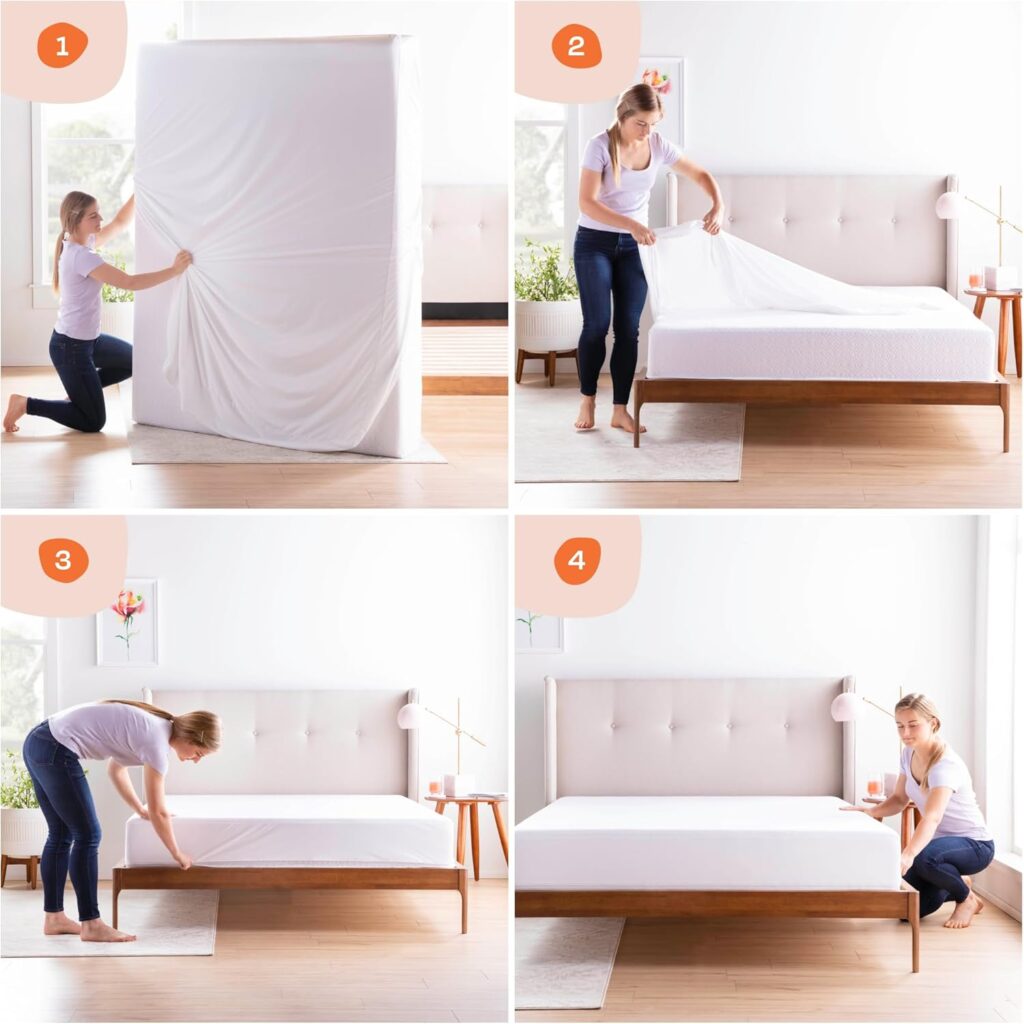
Even the best bed bug mattress encasements can fail if they are not installed correctly.
One small tear, a loose zipper, or a trapped bug can undo hundreds of dollars in pest control. This is like sealing a vault; every inch must be tight.
When installed right, your encasement locks in existing bed bugs, blocks new ones, and keeps your mattress protected for years.
Here’s how to do it without ripping fabric or losing your patience.
Preparing Your Mattress Before Installing the Encasement
Before sealing anything, clean your bed thoroughly to prevent trapping live bed bugs inside.
- Vacuum the mattress thoroughly. Focus on seams, edges, and the tag — those tiny folds are where bed bugs hide.
- Scrub seams with a stiff brush. This helps break loose hidden eggs before your final vacuum pass.
- Dispose of vacuum contents immediately. Seal the bag in plastic and throw it outside, not in your indoor trash.
- Check your box spring and bed frame. Look for cracks, staples, or loose fabric where bed bugs love to hide.
- Protect the encasement. Cover sharp frame edges with felt pads or tape to prevent tearing during installation.
How to Install the Mattress Encasement (With or Without Help)
It’s easier with two people, but if you’re alone, take it slow and steady.
- Lay the bed bug encasement flat on the bed with the zipper open.
- Stand the mattress upright and slide one end into the encasement first.
- Gently pull the fabric over the mattress, don’t yank or stretch it.
- Lay the mattress flat again and zip slowly, checking that nothing snags.
- Once closed, secure the zipper with its lock, safety pin, or built-in guard.
Solo tip: Lift one corner at a time, rather than the entire mattress.
One common mistake I see people make is zipping too fast. That creates tiny tears that bed bugs can crawl through.
Slow and careful is better than fast and useless.
Installing the Box Spring Encasement
Box springs are trickier than they look, but a tight fit is essential since they’re a favorite hiding place for bed bugs.
- Vacuum the box spring, especially around corners and the underside.
- Position the box spring encasement with the zipper opening at one end.
- Slide it on gently, keeping all corners aligned.
- Zip it closed completely and seal the end with the zipper guard.
- Reinstall the box spring on the frame carefully. Avoid scraping or tearing the encasement.
The hollow frame of a box spring makes it a magnet for bed bugs. A secure encasement turns it from their home base into a sealed trap.
Post-Installation Care and Maintenance for Bed Bug Mattress Encasements
Once your bed bug mattress encasements are installed, don’t remove them too soon.
Bed bugs can survive for up to 18 months without feeding, so patience is key.
Keeping your encasement sealed that long ensures every last bug inside dies off for good.
Routine checks matter. Every 2–3 months, inspect your mattress and box spring encasements for rips, loose seams, or broken zippers.
If you find any damage, replace the encasement immediately. Small tears or tape “repairs” won’t stop bed bugs — they’ll crawl right through.
During an active infestation, wash only the sheets or protectors that cover the encasement, not the encasement itself.
Opening or removing it too early can release trapped bed bugs.
Once your pest control professional confirms complete eradication, you can safely unzip, wash, and reinstall the encasement — if the brand allows machine washing.
Most high-quality waterproof mattress protectors and dust mite and bed bug protectors can be washed on a gentle cycle and dried on a low heat setting.
Always recheck for damage or zipper issues before putting it back on.
Top-rated brands like Protect-A-Bed, SafeRest, and Mattress Safe design their full encasement mattress protectors to last 5–10 years when handled with care.
Regular inspections and gentle washing can easily extend their life even further.
Proper installation and maintenance turn a simple encasement into real bed bug armor.
Skip a step, rush a zipper, or pull it off too early, and you risk undoing months of progress.
Take your time now — you’ll gain years of comfort, safety, and peace of mind later.
How to Know If Your Bed Bug Mattress Encasement Is Working
Most people miss the fact that bed bug mattress encasements don’t give instant results.
You won’t see bed bugs dramatically dying off in front of you. Their power is quiet.
They trap, block, and starve bed bugs slowly but effectively.
The real proof your encasement is working shows up in what doesn’t happen: no new bites, no bed bugs crawling, and no panic when you check your sheets at night.
Here’s how to tell if your encasement is doing its job and when it’s time to replace it.
Signs Your Bed Bug Mattress Encasement Is Working
You’ll know your encasement is protecting your bed if:
- You stop waking up with new bite marks.
- You don’t see live bed bugs, eggs, or dark droppings on your mattress.
- The surface stays smooth, with no holes, rips, or loose seams.
- Any bed bugs trapped inside die off over time, leaving behind empty shells visible through the fabric.
White or light-colored encasements are most effective because they make it easier to spot any bed bug activity.
If you ever see a live bed bug crawling on top of your mattress, that means it’s coming from somewhere else in your room — not from inside your mattress.
Pro tip: Use a flashlight to inspect along seams and zippers once a week for the first month, then once a month after that.
Checking for Bed Bugs in Other Areas
Even the best bed bug mattress protectors only guard your mattress and box spring.
Bed bugs can still hide in your headboard, furniture, carpet edges, or even inside electrical outlets.
If you still wake up with bites after sealing your bed, the bed bugs are hiding elsewhere.
Check these spots carefully:
- Behind the headboard and along wall seams
- Inside cracks of nightstands or dresser drawers
- Around carpet edges and under baseboards
- Inside couches, curtains, and even backpacks near your bed
Place bed bug interceptor traps under your bed legs. These small devices detect any bed bugs attempting to climb up or down, allowing you to identify bed bug activity early.
If you still find live bed bugs or eggs after two to three weeks, call a licensed pest control expert — it likely means the infestation spread beyond the bed.
When to Replace Your Encasement
Even the best bed bug mattress encasements don’t last forever. Replace yours if:
- The zipper breaks or no longer seals properly.
- You find rips, tears, or worn-out fabric.
- It’s been several years, and the material looks thin or discolored.
If your infestation is gone, replacing the encasement gives you a clean start and peace of mind.
Most high-quality waterproof mattress covers and bed bug encasements are designed to last 5 to 10 years.
However, if one becomes damaged during an infestation, it should be replaced immediately.
Expert tip: Never try to patch an encasement with tape or glue. Bed bugs can slip through spaces thinner than the edge of a credit card. Always replace it entirely.
The best sign that your encasement is working is simple: nothing happens. No bites. No crawling bugs. No late-night panic.
A good hypoallergenic bed bug mattress cover does its job silently every night. It protects your sleep while you forget the nightmare ever started.
Integrating Bed Bug Mattress Encasements Into Your Complete Treatment Plan
If you think bed bug mattress encasements alone will end your bed bug infestation, think again.
They provide a strong defense, but are not a complete cure. Absolute protection comes from using them as part of a comprehensive plan that eliminates bed bugs wherever they hide.
You need to think of the encasement as the lock and your treatment as the key. You need both to shut the problem down for good.
Why Encasements Alone Don’t Work
Encasements protect your mattress and box spring — the bed bugs’ favorite hangouts — but they don’t stop them from hiding in other places.
Bed bugs can crawl into cracks in your headboard, behind outlets, under carpets, or inside drawers.
If you only seal your mattress, they’ll just move and wait for you.
According to pest management experts, encasing a mattress without also treating the rest of the room will not eliminate a bed bug infestation.
Since bed bugs hide in many places besides the mattress, such as the box spring, bed frame, and other furniture, a comprehensive approach is required for effective control
Encasements stop bed bugs from feeding on you in bed, but to kill the rest, you’ll need extra steps like steam treatment, chemical sprays, or professional heat treatment.
How to Work With Pest Control the Right Way
Working with a licensed exterminator makes a huge difference. They know exactly how bed bug mattress covers fit into your total treatment plan.
Here’s how to do it right:
- Talk to your exterminator first. Ask which encasement brands they recommend — they often test specific ones.
- Install at the right time. Most exterminators recommend adding encasements after the first treatment round, when the majority of bed bugs are already dead.
- Keep them sealed. Don’t remove the encasements for 12–18 months. That’s how long trapped bed bugs can survive without food.
- Get follow-ups. Pest control companies typically inspect two or three times to confirm that all bed bug is gone. Keep your covers sealed until you’re cleared.
Pro tip: Heat treatments (above 120°F) work perfectly with encasements. The heat kills every life stage instantly, and the encasement prevents new bugs from returning.
Long-Term Prevention After You’re Bed Bug-Free
Once your infestation is gone, your focus shifts to stopping re-infestation.
Keep your encasements on, permanently. They act as a 24/7 dust mite and bed bug barrier, protecting your mattress for years.
Here’s how to stay bug-free for good:
- Inspect regularly. Inspect your bed seams, zippers, and frame monthly.
- Be travel smart. Always inspect hotel beds, use luggage encasements, and wash your clothes in hot water when you get home.
- Avoid used furniture. Bed bugs are particularly fond of secondhand couches and mattresses. If you must buy used, inspect carefully.
- Educate your family. Teach kids not to bring in bedding, toys, or clothes from homes with pest issues.
With good habits and high-quality encasements, you create a lasting wall of defense against bed bugs, and their return becomes almost impossible.
Bed bug mattress encasements are the backbone of long-term protection.
However, they only work when paired with thorough pest control, ongoing inspections, and effectiveprevention.
When you combine certified encasements with a complete plan, you don’t just stop bed bugs — you make your home a fortress they can’t invade again.
FAQs About Bed Bug Mattress Encasements
People ask the same questions about bed bug mattress encasements all the time, and it’s no surprise.
The internet is flooded with fake “bed bug-proof” covers and chemical-filled junk that can do more harm than good.
This quick FAQ clears up the confusion and provides you with simple, honest answers that protect your home, health, and finances.
Q: Can I use a regular mattress protector for bed bugs?
No. Regular protectors only cover the top, like a fitted sheet. Bed bug mattress encasements cover all six sides and zip shut tightly so no bed bugs can get in or out. If it doesn’t say “bed bug certified” or “lab-tested,” it’s just a glorified spill protector, not real defense.
Q: How long should I keep the encasement on?
Keep it sealed for at least 12 to 18 months. Bed bugs can live that long without eating, especially in cool rooms. If you unzip early, you risk letting surviving bed bugs back out. Many people leave their encasements on permanently; it’s an extra peace of mind that costs nothing.
Q: Are bed bug encasements safe for kids and pets?
Yes, as long as they’re chemical-free. Avoid pesticide-treated covers that claim to “kill on contact.” Look for certifications like Oeko-Tex Standard 100 or Asthma & Allergy Friendly, which prove the fabric is safe for sensitive skin. These encasements use a physical barrier — not chemicals — to stop bed bugs and dust mites.
Q: Do I need both a mattress and a box spring encasement?
Definitely, most bed bugs hide in the box spring — it’s dark, hollow, and full of cracks. Using just one encasement is like locking your front door but leaving the back one wide open. You need both the mattress and box spring encased for complete protection.
Q: Can I wash my bed bug mattress encasement?
Yes, but not during an active infestation. Leave it sealed until all bed bugs are gone. You can wash your top sheet and mattress pad regularly to keep them clean. Once treatment is complete, check the label — most encasements are machine washable in warm water and safe to dry on a low heat setting.
Q: What’s the difference between waterproof and bed bug-proof?
“Waterproof” prevents liquids, such as sweat or spills, from soaking through. “Bed bug-proof” means the fabric is tightly woven and sealed with a zipper that bed bugs can’t bite or crawl through. The best encasements, such as SafeRest or SureGuard, are both waterproof and bug-proof, protecting your mattress from moisture and pests simultaneously.
Q: Where’s the best place to buy them?
Buy from trusted sellers like Amazon, Protect-A-Bed, or AllergyStore.com. Always check for certifications and real customer reviews mentioning successful use during infestations. Skip the dirt-cheap options, thin fabric, and weak zippers that tear fast, wasting your money.
Q: My encasement ripped. What do I do now?
Replace it immediately. Even a tiny tear ruins the barrier. Don’t try to tape or glue it. Brands like Mattress Safe, CleanRest, and Bargoose make durable bed bug mattress covers with reinforced seams that last for years.
Conclusion
Bed bug mattress encasements are your strongest shield against one of the toughest pests you’ll ever face.
However, they only work if you select the right type, install them correctly, and keep them sealed long enough to do their job.
Here’s what really matters:
- Choose certified bed bug-proof encasements with tight-weave fabric and micro-tooth zippers.
- Cover both your mattress and box spring, never just one.
- Measure carefully so the fit is snug, and the zipper closes completely.
- Keep the encasements sealed for at least 12 to 18 months to starve out every trapped bug.
- Use them as part of a complete bed bug treatment plan, not a standalone fix.
The proper encasement protects more than your bed; it protects your sleep and your sanity.
Once installed, you can rest easy knowing there’s a waterproof, dust mite, and bed bug barrier between you and anything trying to bite.
If you’ve fought bed bugs before, you already know prevention costs far less than another infestation.
So don’t wait.
Measure your mattress, select a hypoallergenic bed bug mattress cover from a trusted brand, and secure your bed tightly.
With the right bed bug mattress encasements, your home stops being a target and becomes a fortress.
You’ve got the knowledge, now lock the bed bugs out for good.