
You just saw some weird black specks on your bed that made your heart jump into your throat.
You know, deep down, this might be it. The thing you hoped would never happen.
Those little bed bug fecal spots are not just dirt. They are bed bug droppings or bed bug poop.
It is the surest sign that bed bugs are feeding on you at night.
If you ignore these fecal stains, you are giving those bed bugs a free pass to move their whole family into your home.
They will multiply. They will hide in your walls. And they will eventually cost you thousands of dollars to eliminate.
Most people see these black marks and wait. They hope it’s just an ink spot or some spilled food. That hope is what gives the bed bugs a head start.
But you’re not most people.
The truth is, bed bug feces are just dried blood they pooped out after biting someone. It’s one of the most common early signs of an infestation.
And knowing how to spot the difference between a fecal spot and a harmless smudge is your superpower. It turns your panic into a plan.
This guide will show you, step by step, how to determine what you’re dealing with for sure.
You will learn how to confirm you have bed bugs before it becomes a nightmare.
You will sleep in peace again.
But first, I need you to do something. Go get a flashlight. Right now. Look closely at the seams of your mattress.
Are those little dots there?
They could be nothing.
Or, they could be the warning that saves you from a severe infestation.
In the next 2 minutes, I’ll show you exactly how to tell the difference.
Keep reading to find out.
We independently review every product we recommend. We test for safety, efficacy, and value, so you can buy with confidence. When you purchase through our links, we may earn a commission at no extra cost to you. Learn more about our testing methodology and affiliate disclosure.
What Are Bed Bug Fecal Spots? (The Science Behind the Stains).
Picture this: a bed bug feeds on you for 5 to 10 minutes while you’re asleep, drawing just enough blood to fill its tiny body.
A few hours later, it digests what it doesn’t need and expels the rest as dark, tar-like waste.
That’s what you’re seeing — the fecal spots, or bed bug droppings, that mark their hidden feeding grounds.
These stains are the bugs’ calling cards, proof they’ve been feeding nearby.
Bed bugs typically feed every 5 to 7 days when hosts are readily available, and each meal leaves behind small black or dark brown spots that soak into fabric like ink.
Because they excrete shortly after feeding, these spots often cluster where they rest, such as mattress seams, bed frames, and wall crevices.
The science is simple: their waste is partially digested human blood rich in iron, which oxidizes when exposed to air, creating the characteristic dark color.
Now let’s unpack the biology behind it.
Why Bed Bugs Leave Fecal Matter Behind
Bed bugs are slow, deliberate feeders. Once they’ve fed, they need to excrete waste to digest efficiently and regulate internal pressure.
That waste — semi-liquid, iron-heavy fecal matter— leaves dark marks on nearby surfaces.
Some research even suggests the droppings contain pheromone-like compounds that signal other bed bugs that a safe feeding zone exists.
It’s disgusting, but it’s also how infestations grow.
One well-fed bed bug can produce multiple fecal spots per meal, so spotting even a few could mean dozens more are hiding.
Bed bug fecal spots are also easier to find than the bed bugs themselves.
Adults and nymphs are masters of hiding, tucking into seams thinner than a credit card, while their waste, on the other hand, stains and spreads.
That’s why seasoned exterminators look for droppings first because they’re the breadcrumb trail that betrays an invisible infestation.
The Difference Between Fecal Spots and Blood Stains
Blood stains and fecal spots might look similar at a glance, but the difference is night and day once you know what to look for.
- Blood stains are bright red or rusty, often from crushed bed bugs or smeared bites. They tend to be larger and irregular, sometimes appearing as streaks or smudges near the center of the bed.
- Fecal spots, on the other hand, are dark brown to black and more uniform, like ink dots from a felt-tip marker. They’re the color of dried blood that’s been digested, oxidized, and expelled. When tested with a damp cloth or cotton swab, they smear into a reddish-brown mark — a telltale sign of digested blood, not fresh.
If you find a series of dark, round dots clustered near mattress seams or headboard joints, you’re not looking at dirt or random stains.
You’re looking at evidence of feeding and digestion, an unmistakable signal of bed bug activity.
What Do Bed Bug Fecal Spots Look Like? (Visual Identification Guide).
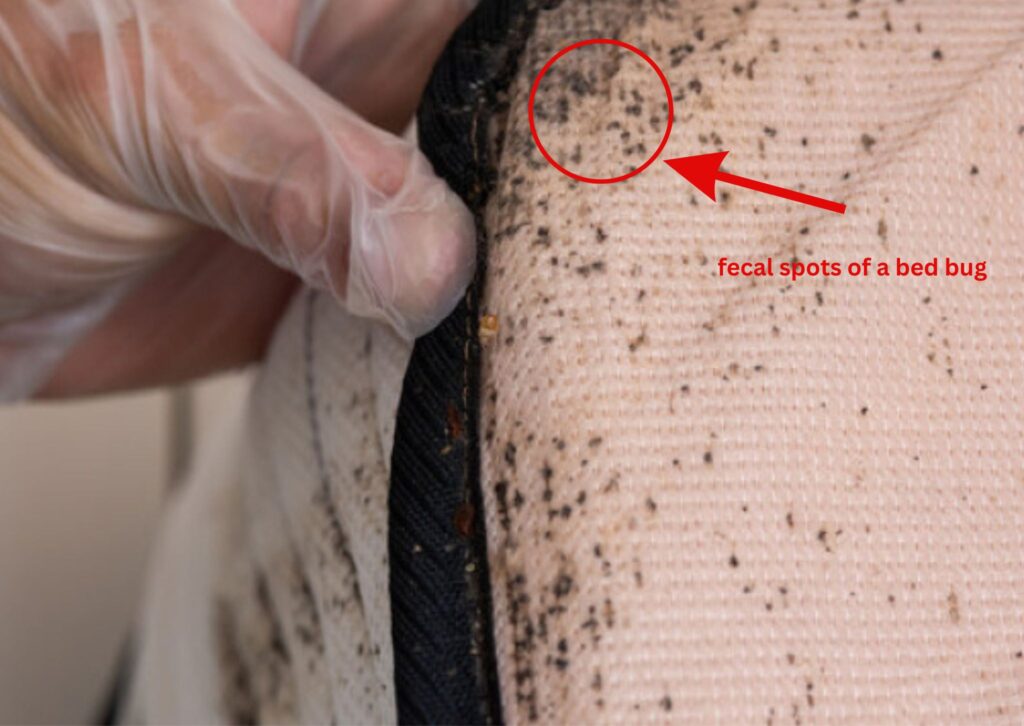
You don’t need a magnifying glass to spot bed bug fecal spots, but you do need to know what you’re looking for.
Bed bug fecal spots are like tiny ink stains, the kind a leaky pen might leave if it touched fabric for a second.
These spots don’t sit on top like dust or lint; they soak in, leaving permanent, irregular dots that refuse to wash or fade.
This section breaks down what they look like, how they behave on different surfaces, and even how they smell because, yes, bed bug poop has a scent.
Color & Appearance
Fresh bed bug droppings are dark brown to black, almost tar-like when first excreted.
Over time, they may fade to a rusty or reddish-brown tone as the iron in the digested blood oxidizes.
On fabric, they often appear as pinpricks of black ink; on wood or plastic, they dry glossy or slightly raised.
They never appear bright red. Bright red marks mean fresh blood, likely from a crushed bed bug or bite.
Bed bug fecal spots are always darker, duller, and more stubborn to remove.
If you’re unsure, gently rub the spot with a damp cotton swab. Actual fecal matter will smear into a brownish-red streak, revealing that telltale blood residue beneath.
Dirt or mold won’t smear this way; they’ll stay black or gray.
Size & Shape
Fecal spots typically appear as pinpoint-sized marks or fine-tipped marker dots, approximately 1-2 millimeters in diameter, though size may vary.
Because the feces are semi-liquid when released, they tend to spread slightly on fabric but bead up on non-porous surfaces such as plastic or metal.
You’ll often find multiple spots grouped in clusters or short trails, showing where bed bugs feed and retreat.
A single bed bug can produce several of these per meal, so finding even a few clustered together is rarely random.
The spacing usually aligns with the edges, seams, or corners where bed bugs prefer to hide during the day.
Texture & Behavior
Touching them (carefully, with gloves) reveals another clue. Dried bed bug feces are gritty or crusty, and they’ll crumble into powder when scraped.
Add moisture, and the spot will bleed into a reddish smear — a dead giveaway that you’re dealing with digested blood.
On fabrics, the stains sink deep and are almost impossible to remove completely, even after several washes.
On hard surfaces, they sit like tiny black specks of paint, usually with slightly uneven edges.
When found along baseboards, wall seams, or bed frames, these dots confirm that the bed bugs aren’t just visiting — they’re nesting.
Smell
Most people overlook this detail, but bed bug fecal matter has a distinct smell.
It’s faint when there are only a few spots, but larger infestations carry a musty, rusty odor, sometimes compared to old pennies or a damp towel left too long.
This smell comes from the oxidized blood and chemical compounds in the bed bugs’ excrement.
It’s different from the sweet, coriander-like scent of live bed bugs.
If your bedroom smells slightly metallic or moldy and you’re seeing dark specks on your sheets, those are two strong indicators you’re not imagining things.
Visual identification is the first line of defense. Bites can be confusing and inconsistent, but fecal spots never lie.
They appear early, persist after cleaning, and indicate where the infestation originated.
Knowing exactly what they look like lets you move from “Do I have bed bugs?” to “I know I do, and here’s where to start.”
Where to Find Bed Bug Fecal Spots (Inspection Checklist).
You’ve seen what they look like; now it’s time to find where they’re hiding. Bed bug fecal spots are like a crime scene trail as each dark dot points you closer to the culprit.
Since bed bugs feed near where you sleep or rest, their droppings will always show up close to their hiding places.
The key is to search methodically, not randomly.
Here’s a complete inspection checklist to uncover every possible hiding zone.
On Your Mattress & Bedding
Start where the evidence usually begins, your bed. Bed bugs feed while you’re asleep, so their waste collects where they rest afterward.
- Mattress seams and piping: Check the edges, corners, and stitching where the bed bugs hide and defecate after feeding.
- Under fitted sheets: Pull everything back and look at the fabric folds, especially near the top and bottom edges.
- Pillowcases and pillows: Inspect seams, tags, and openings. Fecal spots can appear near where your head rests.
- Box spring undersides: Flip the box spring or inspect with a flashlight; bed bugs love the thin fabric layer underneath.
- Bed skirt and nearby blankets: Look for clusters of black specks, especially along the lower folds.
If you see several dark spots lined up in a row or tight cluster, that’s usually not random dirt — it’s a bed bug’s bathroom.
Around the Bed Frame & Furniture
Once the bed bugs establish base camp in your bed, they expand outward into the furniture that touches or surrounds it.
- Bed frame joints, screws, and cracks: Use a flashlight and inspect every crevice as bed bugs slip into gaps thinner than a credit card.
- Headboards and nightstands: Remove or pull back headboards slightly and check behind them. Look in drawers, joints, and undersides of nightstands.
- Upholstered furniture seams: Sofas, recliners, and even office chairs can collect fecal spots along stitching and cushion edges.
- Curtains and drapes near the bed: Check folds and attachment points on the rod.
These are not just random areas; they’re secondary harborage zones, where bed bugs hide during the day before feeding again.
Hidden & Unexpected Places
Heavy infestations leave evidence in places most people never check. If you’ve already spotted stains near your bed, widen your search radius to include these zones:
- Baseboards and carpet edges: Look where walls meet floors. You might find a trail of black dots leading toward the bed.
- Electrical outlets and light switches: Bed bugs love these tight, dark cavities. (Remove covers carefully and use a flashlight.)
- Wallpaper seams and wall moldings: Tiny cracks behind loose wallpaper are common hiding spots.
- Behind picture frames and wall art: Bed bugs cluster behind objects hung near beds.
- Inside electronics: Alarm clocks, chargers, and even TVs have been found harboring droppings in severe infestations.
Bed bugs don’t discriminate. If an object is near a human heat source and offers a crack to hide in, they’ll use it.
Inspection Pro Tip
Use a bright LED flashlight and a magnifying glass if needed. For more serious checks, a UV flashlight can make hidden fecal spots fluoresce faintly, especially those that have aged or soaked into fabric. Keep a roll of clear tape nearby to collect samples for later testing or professional review.
Knowing exactly where to look can save you from wasting time and money.
Most infestations are confirmed not by finding live bed bugs but by finding clusters of fecal spots in the right locations.
The more thorough your inspection, the faster you can confirm what’s really happening and decide whether you can handle it yourself or call in an expert.
How to Test & Confirm Bed Bug Fecal Spots (DIY Methods).
Finding suspicious black dots is nerve-wracking, but guessing gets you nowhere. The good news is you can test for bed bug fecal spots at home without using a lab coat or microscope.
These DIY methods help you tell whether you’re dealing with actual bed bug droppings or just everyday stains.
None of these is 100% foolproof, but combined, they give you a solid answer before you start tearing your house apart.
The Smear Test (Most Common DIY Method)
This is the standard for quick confirmation. Bed bug feces contain digested blood, so they react to moisture.
How to do it:
- Dampen a cotton swab or paper towel with water.
- Gently rub the suspected spot.
- Watch what happens.
Results:
If it smears into a rusty or reddish-brown streak, that’s a positive sign of bed bug feces. The brownish hue comes from the iron in digested blood.
If it stays black, gray, or doesn’t spread, it’s likely something else, such as paint, mascara, mold, or even crushed dirt.
Pro Tip: Don’t over-soak the fabric. Too much water can distort the color and compromise the test results.
Time needed: 1 minute.
The Alcohol Wipe Test
If you want a stronger version of the smear test, try using isopropyl alcohol wipes (or even baby wipes).
How to do it:
- Take a clean alcohol wipe.
- Rub gently over the dark spot.
- Examine the wipe.
Results:
If you see reddish-brown transfer on the wipe, it’s a strong indicator of digested blood. If nothing transfers, it’s more likely dirt, ink, or food residue.
Alcohol also helps dissolve fats in the feces, making this test slightly more sensitive than plain water.
Time needed: 2 minutes.
Warning: Alcohol is flammable. Never use it near heat sources or outlets during inspection.
UV Light & Detection Kits
Not all fecal spots are visible under normal light. A 2022 peer-reviewed study found that bed bugs produce clear fecal spots in amounts ranging from 38.5% to 55.5%, visible only under ultraviolet light.
How to do it:
- Turn off room lights.
- Shine a UV flashlight (365–395 nm wavelength) across bedding, seams, and furniture.
- Look for small glowing dots or faint shadows, as those are hidden or aged fecal spots.
For even more certainty, use a Bed Bug Blue detection kit. This product uses a reactive agent that turns blue if the spot contains blood residue.
It gives results in under 60 seconds and works on both fabric and hard surfaces.
Best for:
- Travelers checking hotel beds.
- Property managers inspecting multiple units.
- Anyone buying second-hand furniture.
Pro Tip: Mark tested areas with tape so you can track where you’ve already checked.
The Tape Test
This one’s all about collecting evidence for a professional.
How to do it:
- Press a piece of clear packing tape firmly over the spot.
- Peel it off carefully.
- Stick the tape onto a white piece of paper.
- Examine it under bright light or with a magnifying glass.
If the speck looks jet black, smooth, and flat (not raised like dirt), you likely have a fecal spot.
This method also allows pest control professionals to test the sample for confirmation.
Bonus: The tape traps potential eggs or debris along with the feces, which is helpful for lab or exterminator analysis.
Testing eliminates the uncertainty. Every confirmed fecal spot means a feeding site, and every feeding site points to nearby hiding bed bugs.
Early confirmation helps you act fast before you’re dealing with hundreds instead of a handful.
If tests come back negative but the stains keep appearing, don’t relax yet; that’s often the calm before a larger infestation becomes visible.
Bed Bug Fecal Spots vs. Other Bug Droppings (What Else Could It Be?).
Most people lose their minds at this stage. You find dark specks, start Googling, and suddenly every bug on Earth looks guilty.
The truth is, not every black dot is a bed bug dropping. Cockroaches, fleas, and even everyday household grime can fool you if you don’t know the differences.
This section separates fact from false alarm so you can stop guessing and start confirming.
Cockroach Droppings
Cockroach feces look nothing like bed bug spots once you know what to look for.
They’re larger, more cylindrical, and grainy, almost like coffee grounds or black pepper flakes.
You’ll find them in kitchens, bathrooms, and around food or water, not near beds or couches.
They also don’t turn reddish-brown when damp; instead, they remain dark brown or black because they’re made of digested food, not blood.
If your mystery spots are scattered across floors, walls, or behind appliances, you’re probably dealing with cockroaches, not bed bugs.
And unlike bed bugs, roaches leave behind odorless waste (until the infestation is massive).
Pro Tip: Bed bug droppings cluster where people sleep; cockroach droppings spread where they eat.
Flea Droppings
Flea poop — known as “flea dirt” — is where things get tricky. It’s tiny, pepper-like, and does contain blood, which means it also turns red when moistened. But here’s the difference is in the location where it’s found and its shape.
Flea dirt typically appears on pets, bedding, or carpet areas near where animals sleep.
It’s smaller and rounder than bed bug feces, usually just dust-sized granules.
To test it, use the same smear or alcohol test. Flea dirt dissolves into red because it’s blood, but if you’re finding these spots on your dog’s bed or the living room rug — not on your mattress or bed frame — flea droppings are the likely culprit.
Pro Tip: If your pet is scratching and the specks appear near fur or pet bedding, think fleas first.
Common Household Stains
This one’s the curveball that fools almost everyone. Mascara, marker ink, paint splatter, mold, and even rust can all mimic bed bug fecal spots under certain lighting conditions.
The trick is to test context and consistency.
- Ink or mascara: Won’t smear reddish-brown, just black or gray.
- Mold: Grows irregularly, often greenish or fuzzy.
- Rust or water stains: Larger and usually accompanied by moisture damage.
One simple rule to note is that bed bug droppings follow a pattern. They appear in clusters or lines, not random blobs.
They live where you sleep, not on ceilings or under sinks. Context is everything.
Visual Comparison Quick Guide
| Type | Color | Shape | Location | Reaction to Water/Alcohol | Smell |
| Bed Bug Feces | Dark brown to black | Round, ink-like | Bedding, furniture seams | Smears reddish-brown | Musty, rusty odor |
| Cockroach Droppings | Black or dark brown | Cylindrical, grainy | Kitchens, walls, appliances | No smear | Mild, oily odor |
| Flea Dirt | Dark reddish-brown | Tiny, pepper-like | Pet areas, carpets | Smears red | Slight metallic odor |
| Household Stains | Varies (black, gray, rust) | Irregular | Random | No smear | None |
Misidentifying stains leads to wasted money and unnecessary panic. Treating for bed bugs when you really have cockroaches — or vice versa — is a recipe for frustration.
Once you know the differences, you can move forward confidently with the right plan of attack.
Bed bug fecal spots are unique because they smear like blood, cluster near sleeping areas, and never thoroughly wash out. That combination doesn’t lie.
What to Do If You Confirm Bed Bug Fecal Spots.
So the tests came back positive. The dots smear red, they’re clustered near your bed, and that sinking feeling in your gut is now confirmed: you’ve got bed bug fecal spots.
The good news is you caught them early, which means you can still contain and eliminate the problem before it becomes a full-blown infestation horror story.
Bed bugs multiply fast, but methodical action beats panic every time.
Immediate Steps (First 24–48 Hours)
- Don’t panic, but act fast. Running around, moving furniture, spreads the bed bugs. Stay calm, move deliberately.
- Inspect and document everything. Take clear, timestamped photos of the fecal spots and surrounding areas. This helps with landlord proof, insurance, or professional inspection.
- Check for live bed bugs, eggs, or shed skins. Focus on mattress seams, headboards, and nearby furniture. Use a flashlight and a magnifying glass.
- Isolate the area. Don’t drag bedding or clothes into other rooms. Keep items where they are until treated or sealed.
- Contain infested bedding. Place sheets, pillowcases, and blankets in sealed plastic bags until you can wash them.
You’re not fighting an invisible monster; you’re tracing a predictable, lazy pest that lives near you because you’re warm and convenient.
DIY Inspection & Treatment Basics
You can begin your own containment before calling in professionals. These methods won’t wipe out large infestations, but they’re highly effective for early-stage control.
- Vacuum with a HEPA filter. Hit mattress seams, bed frames, and baseboards. Dispose of the vacuum bag in a sealed plastic bag outside immediately.
- Pro tip: Use a crevice tool for tight edges and corners.
- Wash all bedding and clothing in hot water (120°F minimum) and dry on the highest heat for at least 30 minutes. Heat kills all life stages.
- Freeze delicate items (like shoes, books, or electronics) in sealed bags for at least 72 hours. Bed bugs die at freezing temperatures of 0°F or below.
- Install bed bug interceptors under bed legs to monitor new activity. These traps catch bed bugs as they attempt to climb up or escape.
- Dust crevices with Cimexa or diatomaceous earth as a residual barrier. These desiccant powders dehydrate bed bugs that cross treated surfaces.
Limitations: DIY treatments are effective for small or contained infestations. If you see live bed bugs repeatedly after a week, you’re past the point of self-management.
When to Call a Professional Exterminator
If you’ve confirmed fecal spots in multiple rooms, spotted live bed bugs, or your efforts aren’t reducing signs after two weeks, bring in the professional exterminators.
- Professional inspection: They’ll use detection tools and sometimes trained dogs to locate infestations you can’t see.
- Treatment options: Professional heat treatment for bed bugs typically costs $1,500 to $5,000 for an entire home, with temperatures of 120°F to 140°F sustained for 2-3 hours, which kill all bed bug life stages. Chemical treatments cost less but often require multiple visits.
- Follow-up monitoring: Reputable exterminators return after 10–14 days to check for new activity.
- Landlord responsibilities: In many states, property owners are legally required to address bed bug infestations within a set timeframe. Check local housing laws before paying out of pocket.
Pro tip: Don’t accept any “one-time spray fix.” Bed bugs need multi-step treatment and follow-up monitoring, period.
How to Clean Bed Bug Fecal Spots (Stain Removal Guide).
Cleaning bed bug fecal spots doesn’t eliminate bed bugs. It only removes the visible evidence, and in some cases, even that’s impossible.
These stains are essentially dried, digested blood, which means they behave like ink or rust: stubborn, permanent, and prone to bleeding into fabric.
Still, cleaning them up is worth it. It helps reduce allergens, odor, and psychological misery.
This guide shows you how to safely remove or lighten the marks without spreading the infestation.
Cleaning Fabric & Bedding
Start with washable items first — bedding, sheets, pillowcases, and clothing — since they can be safely treated with heat and detergent.
- Pre-soak in cold water. This stops fresh stains from setting deeper. Never start with hot water; it “cooks” the stain into the fabric.
- Use mild detergent or a vinegar-water solution (1:1 ratio). Gently blot or scrub the spot using a soft brush.
- Apply baking soda paste (mix three parts baking soda, 1 part water) to the stain. Let it sit for 30 minutes before rinsing.
- Rinse in warm — not boiling — water. Then launder normally using hot water (120°F or higher) to kill any remaining bed bugs or eggs.
- Dry on high heat for at least 30 minutes. This step sterilizes the fabric completely.
Reality check: Bed bug fecal stains are like tattoo ink; most will fade, but never vanish completely. The goal is cleanliness and allergen control, not perfection.
Cleaning Hard Surfaces
Fecal spots on wood, painted furniture, plastic, or metal can be cleaned more aggressively, but it is still essential to protect yourself.
- Wear gloves and a mask. Bed bug droppings can trigger allergies or asthma.
- Mix warm water with mild detergent or white vinegar. Avoid using bleach on painted or varnished surfaces, as it can strip the finish and damage the furniture.
- Scrub gently using a soft cloth or sponge. For stubborn stains, a small toothbrush helps reach corners and crevices.
- Wipe clean and dry immediately. Moisture attracts mold and other pests.
- Dispose of cleaning materials in sealed plastic bags. Never reuse the cloth or sponge elsewhere.
If the spots are inside furniture joints or cracks, clean them, then apply Cimexa dust or bed bug spray (EPA-approved) for prevention.
Safety Precautions
Cleaning after an infestation does more than make your home look nice. It protects your family’s health by getting rid of germs and improving the quality of air in your home.
- Always ventilate the room while cleaning. Bed bug waste can release microscopic allergens.
- Use gloves, a mask, and eye protection. Avoid touching fecal matter directly.
- Never vacuum visible droppings without HEPA filtration. Ordinary vacuums can blow contaminated particles back into the air.
- Avoid mixing chemicals. Vinegar, ammonia, and bleach don’t mix well — they release toxic fumes.
Even after extermination, doing a deep clean helps eliminate residue that could attract other pests or cause irritation.
Removing fecal spots gives you a sense of closure. Once the infestation is handled, seeing those stains daily can trigger anxiety and paranoia.
Cleaning them safely gives you peace of mind and helps restore a sense of normalcy.
The stains might stay faintly visible, but your environment will finally feel clean again, and that’s worth the effort.
Preventing Bed Bug Infestations (Proactive Protection).
Once you’ve dealt with the nightmare, your next mission is making sure it never happens again.
Bed bugs don’t care how clean you are; they hitchhike. They crawl into your luggage, sneak in through used furniture, or ride in on visitors.
The only real defense is prevention: knowing how to block their entry points, detect early signs, and protect your space like a fortress.
Travel Smart
Hotels and short-term rentals are the number one source of new infestations. You can bring bed bugs home in one night without ever seeing them.
Here’s how to stop that from happening.
- Inspect before you unpack. Pull back sheets and check mattress seams, headboards, and corners for black fecal spots or tiny white eggs. If you notice anything, please request a different room or consider leaving.
- Use hard-sided luggage. Fabric suitcases give bed bugs more hiding spots.
- Keep bags off the bed and floor. Store luggage on a rack or in the bathroom.
- After travel, unpack outdoors or in a garage. Immediately wash and dry clothes on a high heat setting.
- For frequent travelers: Carry a portable detection kit or UV flashlight to scan hotel beds.
Pro tip: Even high-end hotels can have bed bugs. Their guests travel constantly, and that’s how infestations spread.
Second-Hand Furniture & Goods
Used furniture is the Trojan horse of infestations. That “bargain” couch on Facebook Marketplace might come with about 200 uninvited roommates.
- Inspect before buying. Look for dark fecal spots, eggs, or shed skins, especially under cushions and seams.
- Avoid used mattresses and bed frames altogether. No deal is worth weeks of sleepless nights.
- Use a UV flashlight or Bed Bug Blue test on suspicious stains before bringing anything indoors.
- For small items: Seal them in black plastic bags and leave them in direct sunlight (or a hot car) for several hours to heat-kill any bed bugs.
If you run a rental property or thrift business, treat every incoming item as if it were contaminated until proven clean.
Home Maintenance
Even if you’re not traveling or thrifting, bed bugs can sneak in through visitors, tenants, or neighbors in multi-unit buildings. Regular maintenance keeps you ahead of them.
- Inspect quarterly. Check mattress seams, headboards, and nearby furniture for fresh fecal spots or shed skins.
- Seal cracks and crevices in walls, floors, and baseboards. Bed bugs love tight gaps.
- Use certified mattress encasements. They trap any surviving bed bugs and prevent new ones from settling in.
- Reduce clutter. The fewer hiding places there are, the easier it is to spot a problem early.
- Install interceptors under the bed and couch legs to catch wandering bed bugs before they spread.
Pro tip: Combine visual inspections with interceptors and encasements, as this three-part defense cuts early infestations by up to 90% according to pest control studies.
FAQs About Bed Bug Fecal Spots.
You’ve seen the photos, tested the stains, maybe even found a few yourself. Still, questions linger, and that’s normal.
Bed bugs are sneaky, and misinformation spreads faster than they do.
These quick answers clear up the most common doubts people have once they start noticing those dreaded black dots.
Can bed bug fecal spots make you sick?
Not directly. According to the CDC, bed bugs don’t transmit diseases; however, their droppings contain allergens that can exacerbate asthma, respiratory irritation, or allergic skin reactions in sensitive individuals. Always wear gloves and a mask when cleaning them.
How many fecal spots does one bed bug produce?
Research indicates a single 5th instar bed bug produces an average of 21 visible dark and light fecal spots after a blood meal, though total production, including clear spots, averages 44.7 spots. Multiply that by dozens of bed bugs, and you’ll understand why infestations look like pepper was sprinkled around your mattress seams.
Are bed bug fecal spots permanent?
Pretty much. They behave like ink stains. You can fade them with baking soda or vinegar, but they rarely disappear completely. Once the infestation is gone, these marks serve as ugly little reminders of what was.
Can you have bed bug fecal spots without seeing bed bugs?
Yes, and this is the most common scenario. Fecal spots are often the first visible sign of an infestation, appearing days before any bed bugs or bites are noticed. They’re easier to find because bed bugs hide, but their waste doesn’t.
Do bed bug fecal spots smell?
Yes. They carry a musty, rusty odor, like wet metal or old pennies. The smell intensifies as the infestation grows, especially in closed or warm spaces.
How long does it take for fecal spots to appear after bed bugs arrive?
Usually, within 5 to 7 days of their first feeding. Bed bugs digest quickly and leave their droppings close to where they hide or rest between meals.
Can cleaning fecal spots stop an infestation?
No. Cleaning removes stains, not bed bugs. If you’ve confirmed fecal spots, focus on inspection, isolation, and treatment; then clean for hygiene purposes afterward.
What if I’m still not sure they’re from bed bugs?
Perform the smear test and the tape test, then contact a professional if you’re unsure. Many pest control companies offer free or low-cost inspections, which is a more cost-effective option than guessing wrong.
Conclusion
You’ve seen the proof, learned the signs, and know what to do next. Bed bug fecal spots aren’t just nasty; they’re your first and best warning.
Those small black stains are the early signs of an infestation that can escalate if left unaddressed.
The moment you recognize and confirm them, you’ve already taken control of the problem most people miss until it’s too late.
The key takeaway from this article is that you shouldn’t wait for bites or crawling bed bugs before you act.
The droppings appear first, and catching them early can save you from a full-blown infestation that costs thousands to treat.
Inspect carefully, test smart, and act immediately.
Start tonight: strip your bedding, check every seam, and document anything suspicious.
If the signs match what you’ve learned here, move quickly to isolate, clean, and, if needed, bring in a professional exterminator.
Remember, bed bugs aren’t a reflection of cleanliness; they’re just opportunists. What matters is how fast you respond.
You now know how to identify, test, and respond with precision. Spot the evidence, trust your results, and protect your space before the infestation multiplies.
If you’re unsure or overwhelmed, schedule a professional bed bug inspection.
It’s the fastest way to confirm the situation and get peace of mind. Every hour you act early saves you days of stress later.